NEUROVX / DESIGN NOTES
← Back to prototype
Research synthesis

Tempus-inspired confidence, translated into a distinct Neurovx system.

The public landing page is not a visual copy of Tempus. It borrows high-level patterns—editorial scale, clinical restraint, role-based pathways, a central computational object, and product storytelling—then rebuilds them around Neurovx’s cognitive-health audience, evidence needs, and accessibility constraints.

What the supplied report established

  • Four core audiences: people, caregivers, clinicians, and researchers.
  • A need for empathetic language, simple navigation, prominent action, and high trust.
  • Feature themes spanning assessment, reports, family collaboration, care navigation, and research access.
  • WCAG-conscious interaction, mobile usability, plain-language consent, and bilingual readiness.
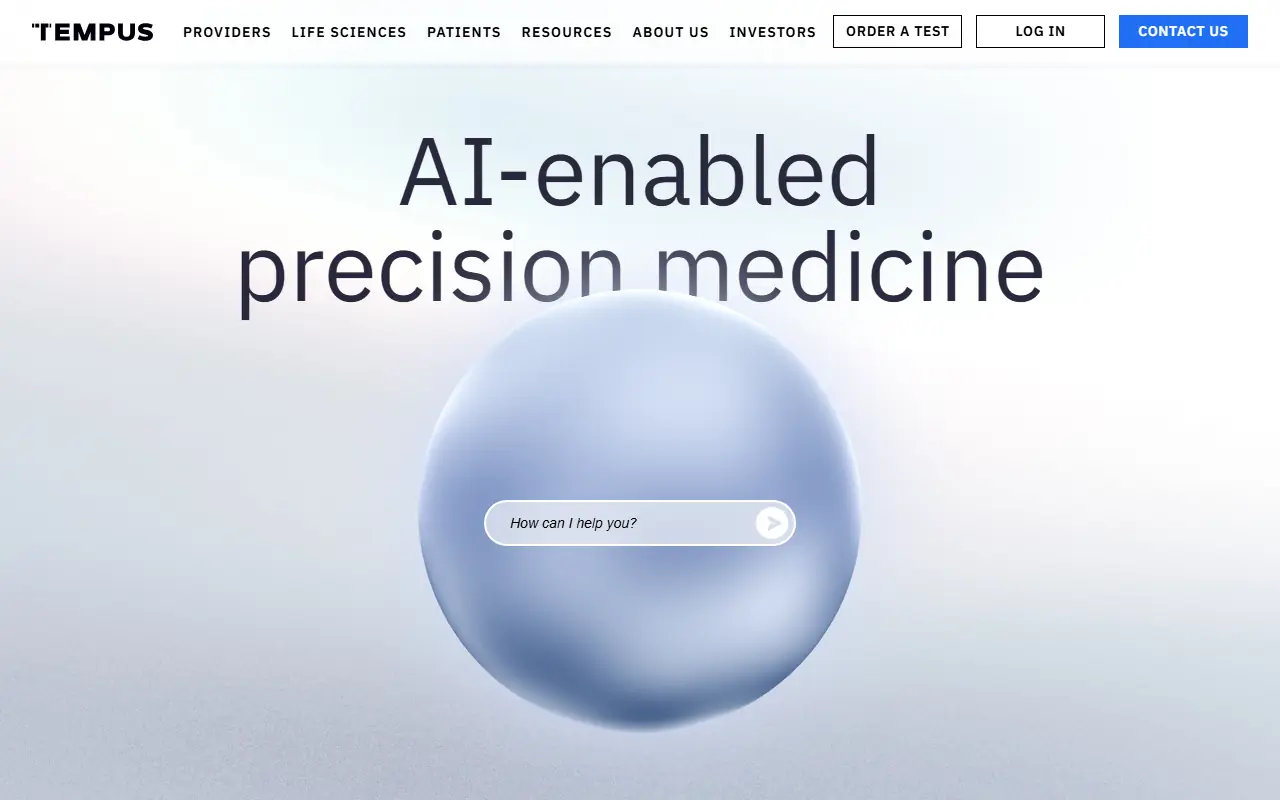
What current Tempus research added

  • A strong umbrella narrative before product detail.
  • Clear pathways for providers, life sciences, and patients.
  • Technology modules framed as one connected operating system.
  • Large type, disciplined navigation, generous whitespace, and a memorable AI object at the center of the hero.
Reference screenshot of the Tempus homepage showing a large AI-enabled precision medicine headline and a pale spherical visual
Visual research reference captured from a public Tempus homepage screenshot. Used only inside this internal design-notes page; no Tempus assets appear in the Neurovx public prototype.

Medical-product copy guardrails

  • Do not call the concept diagnostic, clinically validated, FDA-cleared, or HIPAA compliant without substantiation.
  • Distinguish observed data from model-assisted interpretation.
  • Make uncertainty, provenance, intended use, and human review visible.
  • Route urgent or clinical questions to qualified professionals instead of simulating medical advice.

Accessibility decisions

  • Semantic landmarks, ordered headings, keyboard-operable accordions, tabs, navigation, and modal.
  • Visible focus states and large touch targets.
  • Reduced-motion support and nonessential animation hidden from assistive technology.
  • English and Spanish interface toggle for the primary prototype copy.
Design translation

Key decisions made for Neurovx

01 / HERO

A neural signal globe instead of a literal brain scan

The animated sphere gives Neurovx a memorable computational signature without implying a specific imaging modality or copying Tempus’s orb.

02 / STORY

Trajectory before prediction

The site leads with longitudinal context and interpretable change rather than a dramatic “risk score,” which is more honest for an unvalidated concept and more useful for stakeholder testing.

03 / IA

One platform, role-specific views

Audience tabs demonstrate how the same underlying record can support personal, clinical, research, and partner workflows without presenting a one-size-fits-all interface.

04 / TRUST

Evidence is a first-class product section

The public experience explicitly shows intended-use definition, validation planning, governance, and human oversight instead of relying on decorative trust badges or invented partner logos.

05 / CLAIMS

No invented performance, certification, partners, or testimonials

All dashboard data is labeled illustrative. The site is ready for real evidence once Neurovx has approved claims, studies, security documentation, and institutional relationships.

Primary research links

Sources used in the design process

Tempus — current homepage and umbrella narrative ↗Tempus — technology and audience architecture ↗National Institute on Aging — biomarkers and dementia diagnosis ↗Alzheimer’s Association — earlier diagnosis and emerging biomarkers ↗W3C — Web Content Accessibility Guidelines 2.2 ↗HHS — health-app scenarios and HIPAA applicability ↗
Assumption: Neurovx is the intended brand for the Alzheimer’s / cognitive-health product described in the uploaded ProbrAIn report. The prototype keeps the product position broad enough to refine once intended use, audience priority, inputs, validation status, and regulatory strategy are confirmed.